Some skillet dinners are quick, but they taste like you rushed through dinner.
This one doesn’t.
Garlic Lime Shrimp & Cauliflower Rice Skillet is a fast, bright, savory meal built around juicy shrimp, fluffy cauliflower rice, fresh garlic, zesty lime, and a handful of simple seasonings.
The shrimp cook until tender with lightly golden edges, while the cauliflower rice absorbs all those garlicky, buttery pan juices. Fresh lime juice is added at the end to give everything a bright, clean finish that keeps the skillet from feeling heavy.
And because everything cooks in one skillet, you get a satisfying dinner without a mountain of dishes afterward.
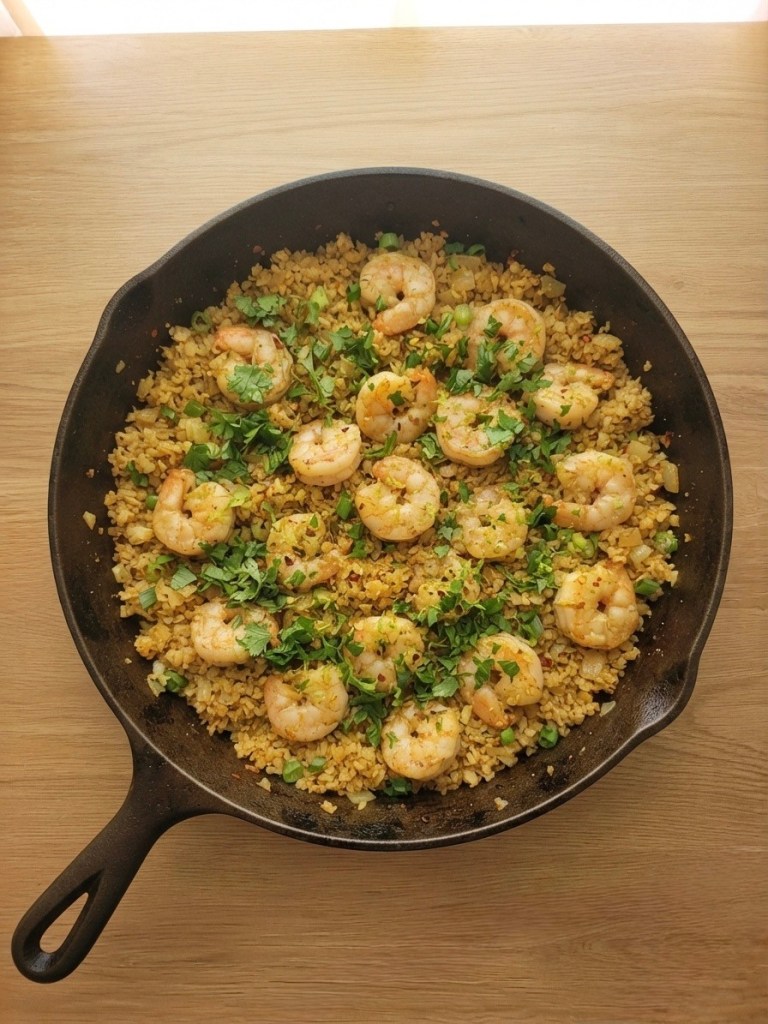
The cauliflower rice isn’t treated like a sad substitute for regular rice here.
It becomes part of the flavor.
As it cooks, it picks up the garlic, lime, spices, and shrimp juices, creating a savory base that tastes much more exciting than plain cauliflower rice.
It’s quick enough for a weeknight, flavorful enough to serve to guests, and easy to portion for meal prep.
- The shrimp are seasoned with garlic, paprika, lime zest, and a little cumin before being quickly cooked until juicy.
- Cauliflower rice keeps the skillet hearty without relying on traditional white rice.
- The shrimp and cauliflower rice are cooked in the same skillet, allowing the flavors to build together.
Ingredients
For the Garlic Lime Shrimp
- 1 lb large shrimp, peeled and deveined
- 1 tablespoon extra-virgin olive oil
- 1 tablespoon unsalted butter
- 4 garlic cloves, finely minced
- 1 teaspoon paprika
- ½ teaspoon ground cumin
- ½ teaspoon onion powder
- ½ teaspoon salt
- ¼ teaspoon black pepper
- ½ teaspoon lime zest
- 1 tablespoon fresh lime juice
For the Cauliflower Rice
- 4 cups cauliflower rice, fresh or frozen
- 1 tablespoon extra-virgin olive oil
- 2 garlic cloves, finely minced
- ¼ cup finely diced yellow onion
- ½ teaspoon paprika
- ¼ teaspoon cumin
- ¼ teaspoon salt
- ¼ teaspoon black pepper
- 2 tablespoons low-sodium chicken broth or vegetable broth, if needed
For the Fresh Finish
- 1 tablespoon fresh lime juice
- 1 teaspoon lime zest
- 2 tablespoons fresh cilantro, chopped
- 1 tablespoon fresh parsley, chopped
- Pinch of red pepper flakes, optional
Optional Toppings
- Extra lime wedges
- Fresh cilantro
- Fresh parsley
- Thinly sliced green onion
- Sliced avocado
- Crumbled feta
- A few pumpkin seeds
Ingredients
For the Garlic Lime Shrimp
- 2 lbs large shrimp, peeled and deveined
- 2 tablespoons extra-virgin olive oil
- 2 tablespoons unsalted butter
- 8 garlic cloves, finely minced
- 2 teaspoons paprika
- 1 teaspoon ground cumin
- 1 teaspoon onion powder
- 1 teaspoon salt
- ½ teaspoon black pepper
- 1 teaspoon lime zest
- 2 tablespoons fresh lime juice
For the Cauliflower Rice
- 8 cups cauliflower rice, fresh or frozen
- 2 tablespoons extra-virgin olive oil
- 4 garlic cloves, finely minced
- ½ cup finely diced yellow onion
- 1 teaspoon paprika
- ½ teaspoon cumin
- ½ teaspoon salt
- ½ teaspoon black pepper
- 4 tablespoons low-sodium chicken broth or vegetable broth, if needed
For the Fresh Finish
- 2 tablespoons fresh lime juice
- 2 teaspoons lime zest
- 4 tablespoons fresh cilantro, chopped
- 2 tablespoons fresh parsley, chopped
- 2 pinches of red pepper flakes, optional
Optional Toppings
- Extra lime wedges
- Fresh cilantro
- Fresh parsley
- Thinly sliced green onion
- Sliced avocado
- Crumbled feta
- A few pumpkin seeds
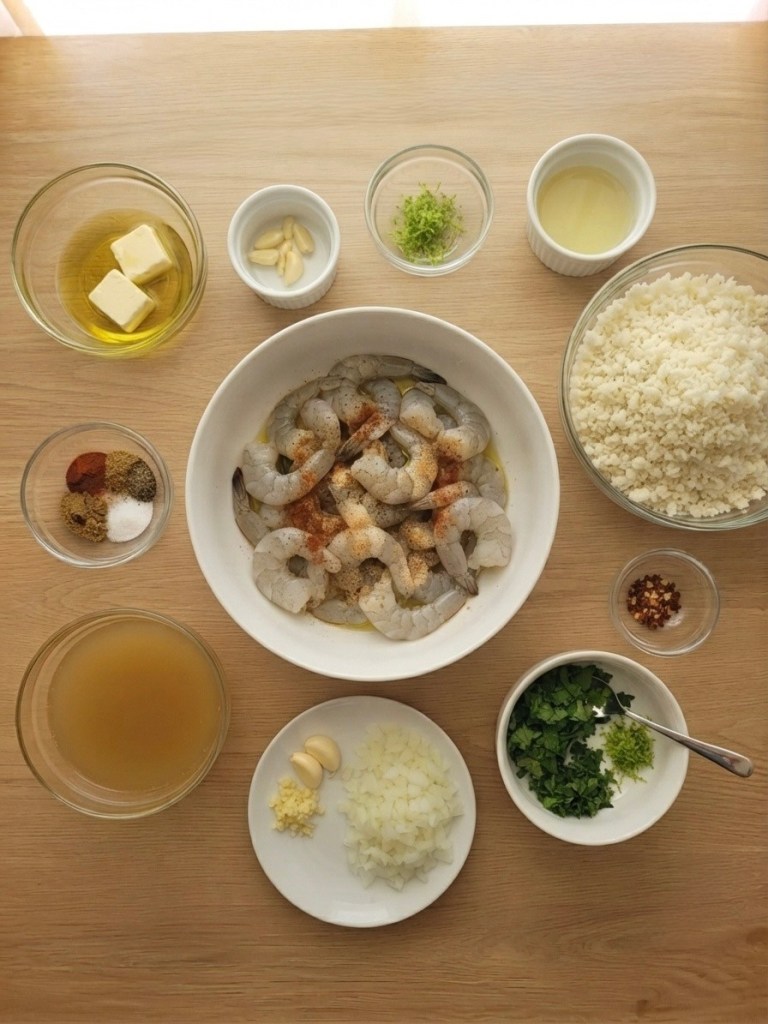
How to Make Garlic Lime Shrimp & Cauliflower Rice Skillet
Step 1: Prepare the Shrimp
If you’re using frozen shrimp, thaw them completely.
Drain them well and pat them very dry with paper towels.
This is important.
Excess moisture can cause the shrimp to steam rather than develop a little golden color in the skillet.
Place the shrimp in a bowl.
Add:
- Paprika
- Cumin
- Onion powder
- Salt
- Black pepper
- Lime zest
Toss until the shrimp are evenly coated.
Don’t add all the lime juice yet.
Fresh lime juice is better added toward the end so its bright flavor remains noticeable.
Step 2: Prepare the Cauliflower Rice
If using fresh cauliflower rice, have it ready to go.
If using frozen cauliflower rice, there is no need to fully cook it beforehand.
If it contains a lot of visible ice, allow it to thaw slightly and drain any excess moisture.
Set aside.
Step 3: Cook the Shrimp
Heat a large skillet over medium-high heat.
Add the olive oil and butter.
Once the butter melts and the skillet is hot, add the seasoned shrimp in a single layer.
Avoid overcrowding the skillet.
Cook for approximately 1½–2 minutes on the first side.
Flip the shrimp.
Cook for another 1–2 minutes, or until they become opaque and pink with lightly golden edges.
Remove the shrimp from the skillet and place them on a plate.
Don’t worry if they’re not heavily browned.
Shrimp cook extremely quickly, and the goal is juicy shrimp rather than dry, rubbery shrimp.
Step 4: Build the Garlic Base
Reduce the heat to medium.
Add the remaining tablespoon of olive oil to the same skillet if the pan looks dry.
Add the diced onion.
Cook for approximately 2 minutes, stirring occasionally.
Add the minced garlic.
Cook for about 30–45 seconds.
You want the garlic to become fragrant without allowing it to burn.
Burned garlic can become bitter very quickly.
Step 5: Add the Cauliflower Rice
Add the cauliflower rice to the skillet.
Stir thoroughly so that the cauliflower rice picks up the garlic and seasoned pan juices.
Add:
- Paprika
- Cumin
- Salt
- Black pepper
Cook for approximately 5–7 minutes, stirring occasionally.
The cauliflower rice should become tender while still retaining enough texture to keep the skillet from becoming mushy.
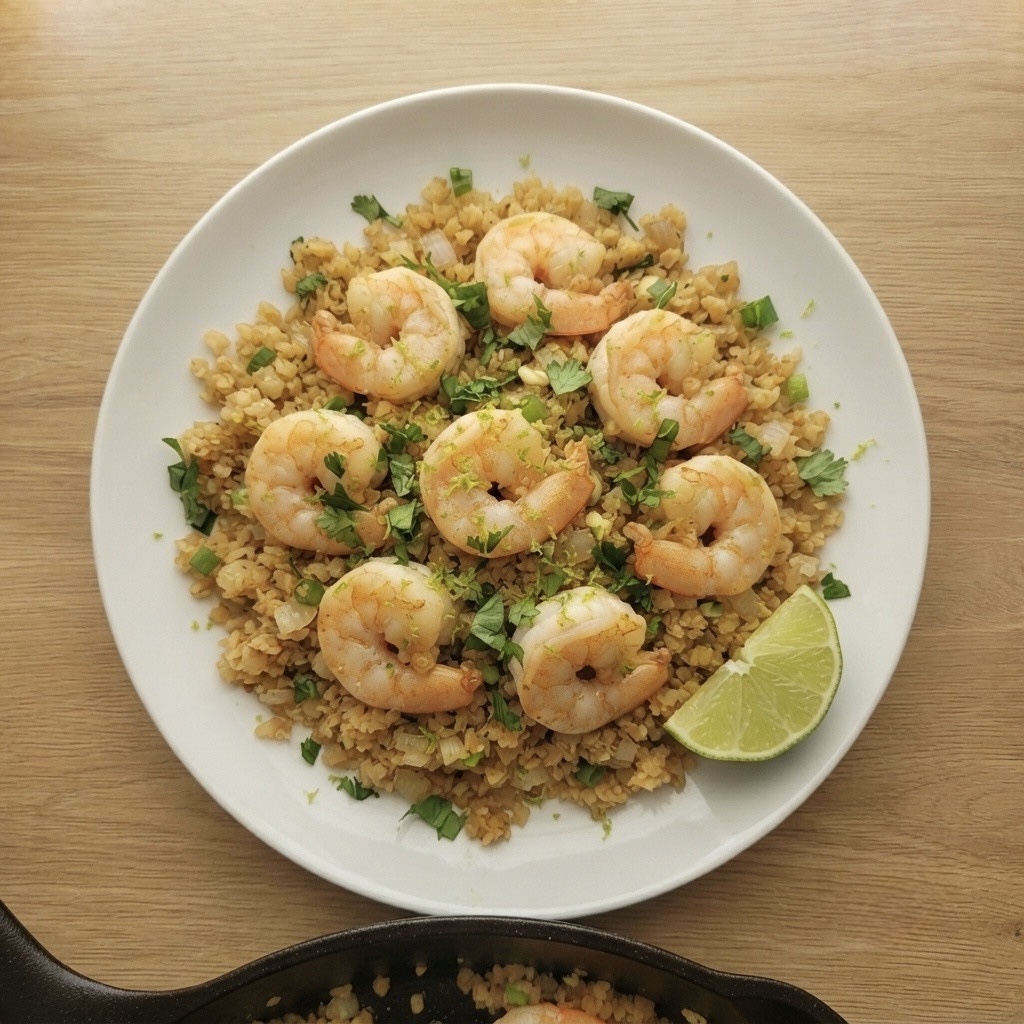
Step 6: Let the Cauliflower Rice Actually Brown
This step makes a big difference.
Don’t stir continuously.
Let the cauliflower rice sit against the hot skillet for about 60–90 seconds at a time before stirring.
That contact with the pan allows some of the moisture to evaporate and creates lightly browned pieces.
Those browned bits add much more flavor than constantly stirring the cauliflower.
If the skillet becomes very dry, add 1–2 tablespoons broth.
Don’t add too much.
You want flavorful cauliflower rice, not watery cauliflower rice.
Step 7: Return the Shrimp
Add the cooked shrimp back to the skillet.
Gently toss everything together.
Cook for another 1–2 minutes, just long enough to warm the shrimp through.
Don’t continue cooking the shrimp for several additional minutes.
Overcooked shrimp can quickly become tough.
Step 8: Add the Lime
Turn off the heat.
Add:
- Fresh lime juice
- Lime zest
- Fresh cilantro
- Fresh parsley
Gently toss.
Taste.
This is the moment to adjust the flavor.
If you want more brightness, add another small squeeze of lime.
If you want more heat, add a pinch of red pepper flakes.
If it needs more seasoning, add a small pinch of salt.
Step 9: Serve Immediately
Divide the skillet between four bowls.
Finish with additional:
- Fresh herbs
- Lime wedges
- Black pepper
- Optional green onion
Serve while warm.
The contrast between the warm garlic cauliflower rice and the bright fresh lime is what makes this skillet so good.
The SmartDietKitchen Flavor Hack
Add lime in two stages.
Use a small amount of lime zest when seasoning the shrimp, then add fresh lime juice after the heat is turned off.
The zest infuses the shrimp with citrus flavor while cooking.
The fresh juice at the end provides that bright, just-squeezed lime flavor.
If you add all of the lime juice at the beginning, much of that fresh character can disappear during cooking.
Share Recipe
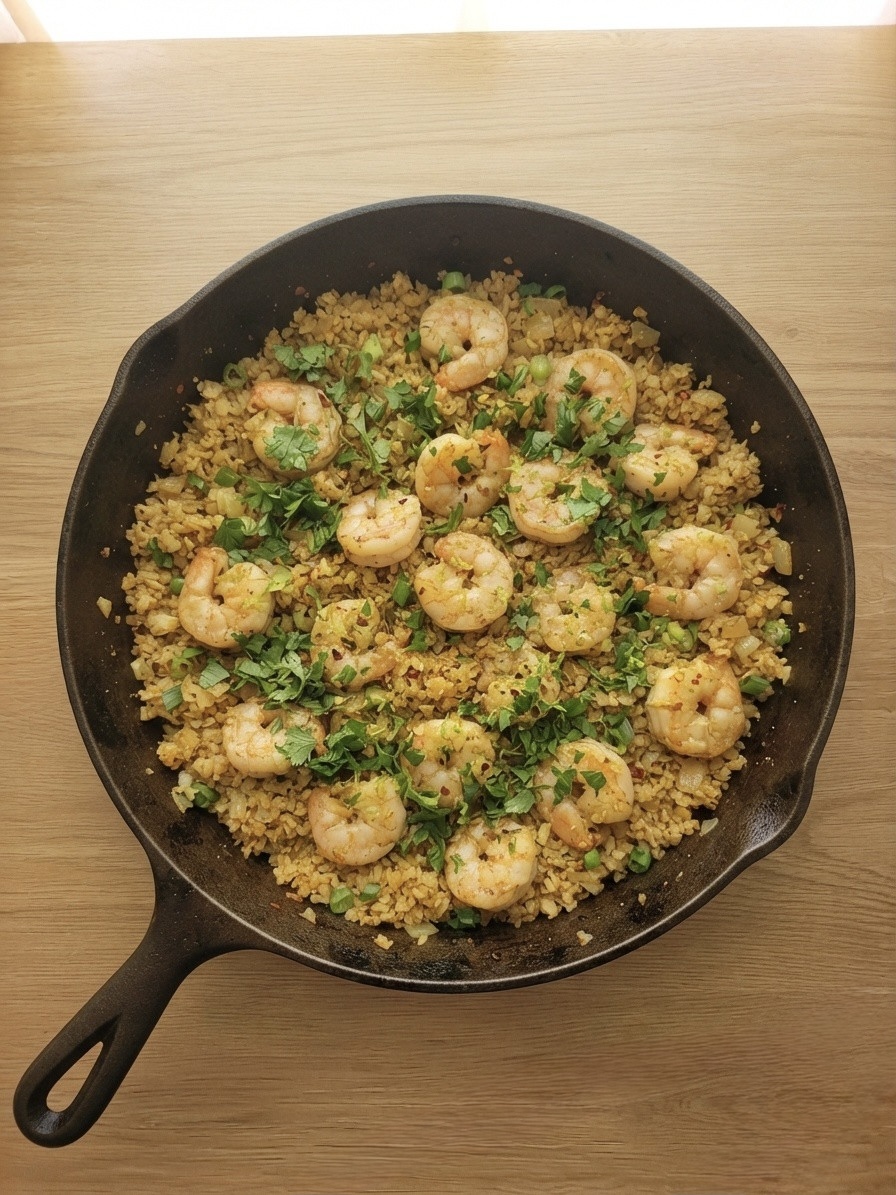
Garlic Lime Shrimp & Cauliflower Rice Skillet
Recipe by

Servings
4

prep Time
10 min

cook TIme
18–20 min

Cuisine:
Latin-inspired / Mediterranean-inspired
The chicken is layered over crisp cucumber, juicy tomatoes, fresh greens, creamy hummus, tangy feta, and a bright lemon-herb yogurt sauce.
Every bite gives you a different combination of textures and flavors.
You get savory chicken, creamy hummus, cool cucumber, juicy tomato, salty feta, fresh herbs, and bright lemon all in the same bowl.
And unlike many bowls that depend on a large serving of rice or grains to make them filling, this version puts the focus on protein, vegetables, and flavorful Mediterranean ingredients.
Ingredients
For the Garlic Lime Shrimp
- 1 lb large shrimp, peeled and deveined
- 1 tablespoon extra-virgin olive oil
- 1 tablespoon unsalted butter
- 4 garlic cloves, finely minced
- 1 teaspoon paprika
- ½ teaspoon ground cumin
- ½ teaspoon onion powder
- ½ teaspoon salt
- ¼ teaspoon black pepper
- ½ teaspoon lime zest
- 1 tablespoon fresh lime juice
For the Cauliflower Rice
- 4 cups cauliflower rice, fresh or frozen
- 1 tablespoon extra-virgin olive oil
- 2 garlic cloves, finely minced
- ¼ cup finely diced yellow onion
- ½ teaspoon paprika
- ¼ teaspoon cumin
- ¼ teaspoon salt
- ¼ teaspoon black pepper
- 2 tablespoons low-sodium chicken broth or vegetable broth, if needed
For the Fresh Finish
- 1 tablespoon fresh lime juice
- 1 teaspoon lime zest
- 2 tablespoons fresh cilantro, chopped
- 1 tablespoon fresh parsley, chopped
- Pinch of red pepper flakes, optional
Optional Toppings
- Extra lime wedges
- Fresh cilantro
- Fresh parsley
- Thinly sliced green onion
- Sliced avocado
- Crumbled feta
- A few pumpkin seeds
Instructions
Step 1: Prepare the Shrimp
If using frozen shrimp, thaw them completely. Drain well and pat the shrimp very dry with paper towels. Removing excess moisture helps them develop better color instead of steaming.
Place the shrimp in a bowl and add the paprika, cumin, onion powder, salt, black pepper, and lime zest. Toss until evenly coated.
Do not add all the lime juice yet. Adding the fresh lime juice toward the end keeps its bright flavor more noticeable.
Step 2: Prepare the Cauliflower Rice
If using fresh cauliflower rice, have it ready to cook.
If using frozen cauliflower rice, there is no need to fully cook it beforehand. If there is a lot of visible ice, allow it to thaw slightly and drain away any excess moisture.
Set aside.
Step 3: Cook the Shrimp
Heat a large skillet over medium-high heat.
Add the olive oil and butter. Once the butter has melted and the skillet is hot, arrange the seasoned shrimp in a single layer.
Avoid overcrowding the skillet.
Cook for approximately 1½–2 minutes on the first side. Flip and cook for another 1–2 minutes, or until the shrimp are opaque and pink with lightly golden edges.
Remove the shrimp from the skillet and place them on a plate.
Avoid overcooking them. Shrimp cook quickly, and the goal is juicy, tender shrimp.
Step 4: Build the Garlic Base
Reduce the heat to medium.
If the skillet looks dry, add the remaining tablespoon of olive oil.
Add the diced onion and cook for approximately 2 minutes, stirring occasionally.
Add the minced garlic and cook for 30–45 seconds, stirring frequently, until fragrant.
Be careful not to burn the garlic, as it can quickly become bitter.
Step 5: Add the Cauliflower Rice
Add the cauliflower rice to the skillet.
Stir thoroughly so the cauliflower rice absorbs the garlic, onion, and seasoned pan juices.
Add the paprika, cumin, salt, and black pepper.
Cook for approximately 5–7 minutes, stirring occasionally, until the cauliflower rice is tender but still has some texture.
Step 6: Brown the Cauliflower Rice
For better flavor, avoid stirring continuously.
Allow the cauliflower rice to sit against the hot skillet for about 60–90 seconds at a time before stirring. This helps moisture evaporate and allows some of the cauliflower to develop lightly browned edges.
If the skillet becomes very dry, add 1–2 tablespoons of broth. Avoid adding too much liquid because the cauliflower rice should remain flavorful rather than watery.
Step 7: Return the Shrimp
Add the cooked shrimp back to the skillet.
Gently toss the shrimp and cauliflower rice together and cook for another 1–2 minutes, just until the shrimp are warmed through.
Avoid cooking them for several additional minutes, as overcooked shrimp can become tough and rubbery.
Step 8: Add the Lime and Herbs
Turn off the heat.
Add the fresh lime juice, lime zest, fresh cilantro, and fresh parsley.
Gently toss everything together.
Taste and adjust the seasoning as needed. Add another squeeze of lime for extra brightness, a pinch of red pepper flakes for heat, or a small pinch of salt if needed.
Step 9: Serve Immediately
Divide the skillet among four bowls.
Finish with additional fresh herbs, lime wedges, freshly cracked black pepper, and optional sliced green onion.
Serve warm.
The combination of savory garlic cauliflower rice, tender shrimp, and bright fresh lime makes this skillet especially flavorful and satisfying.
Notes
Nutrition will vary depending on the exact shrimp, cauliflower rice, butter, oil, and toppings used.
Share this recipe
The Secret to Better Cauliflower Rice
The biggest mistake people make with cauliflower rice is adding too much liquid.
Cauliflower naturally contains a lot of water.
If you add a large amount of broth, the rice can become soft and watery.
Instead:
Cook it hot.
Let moisture escape.
Add only a splash of broth when absolutely necessary.
That gives you cauliflower rice with a much better texture.
Tips for Perfect Shrimp
Pat the shrimp dry
This helps them brown instead of steaming.
Don’t overcrowd the skillet
Cook in batches if your skillet is small.
Watch the color
Shrimp are usually done when they become opaque and pink.
Don’t overcook
Shrimp don’t need a long cooking time.
Add fresh lime at the end
It keeps the citrus flavor bright.
Delicious Variations
Spicy Garlic Lime Shrimp
Add:
- ½ teaspoon red pepper flakes
- ¼ teaspoon cayenne
- Extra lime juice
This version has a noticeable kick while remaining fresh and citrusy.
Cilantro Lime Shrimp Skillet
Increase the cilantro and add extra lime zest.
This gives the skillet a stronger fresh-herb flavor.
Mediterranean Garlic Shrimp
Replace the cumin with dried oregano.
Add:
- Chopped parsley
- A little feta
- Extra lemon or lime
- Sliced olives
This creates a Mediterranean-inspired variation.
Creamy Garlic Lime Shrimp
For a creamier version, stir 2–3 tablespoons plain Greek yogurt into the cauliflower rice after removing the skillet from the heat.
Don’t boil the yogurt.
Stir gently until creamy.
Cajun Garlic Shrimp
Replace the paprika and cumin with your favorite Cajun seasoning.
Add a small amount of red pepper flakes for extra heat.
Finish with lime for a surprisingly good combination.
Fajita-Style Shrimp Bowl
Add finely sliced bell peppers and a little extra onion to the skillet.
Cook them with the cauliflower rice.
Top with cilantro and lime.
Avocado Lime Shrimp Bowl
Add a small amount of diced avocado immediately before serving.
The creamy avocado pairs beautifully with the spicy garlic-lime shrimp.
Bariatric-Friendly Serving Tips
Because bariatric dietary needs vary according to procedure, recovery stage, and individual tolerance, use your bariatric care team’s recommendations for portion size, food texture, and appropriate ingredients.
For a bariatric-friendly serving:
Prioritize the shrimp
Start with the protein portion.
Keep shrimp bite-sized
Cut larger shrimp into smaller pieces if that makes them easier for you to eat comfortably.
Cook the cauliflower until tender
Very firm vegetables may be harder for some people to tolerate.
Avoid excessive toppings
Large amounts of avocado, cheese, seeds, or oils can quickly increase the fat and calorie content.
Eat slowly
Take small bites and chew thoroughly.
Start with a modest serving
Individual tolerance matters more than a fixed serving size.
For people in an early post-surgery stage, follow the specific texture progression provided by their bariatric team rather than assuming a skillet meal is appropriate.
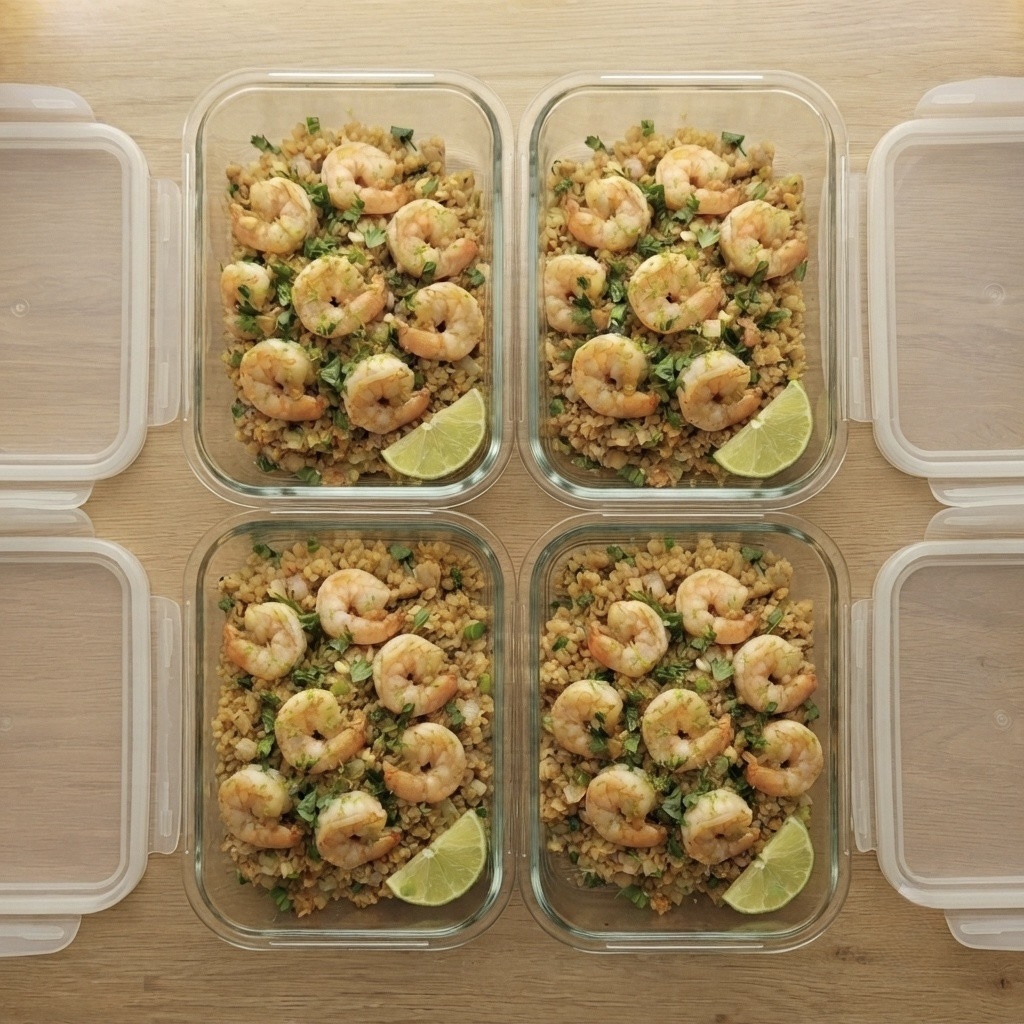
Meal Prep Instructions
This skillet works well for meal prep.
Cook the recipe as directed.
Allow it to cool slightly before dividing into airtight containers.
For four portions, divide the shrimp and cauliflower rice evenly.
Store in the refrigerator.
When ready to eat, reheat gently in the microwave or in a skillet.
Avoid overheating the shrimp.
The goal is to warm them through without continuing to cook them for a long time.
Meal Prep Tip for Better Texture
If you are specifically preparing this recipe several days ahead, consider storing the lime juice separately.
Reheat the shrimp and cauliflower rice first.
Then add fresh lime juice and herbs immediately before eating.
This makes the meal taste much fresher.
Storage
Store leftovers in an airtight container in the refrigerator.
For best quality, use within 3 days.
Keep refrigerated promptly after cooking.
When reheating, use medium heat and stop as soon as everything is warmed through.
Shrimp can become rubbery if repeatedly reheated.
Can You Freeze This Recipe?
You can freeze the cooked cauliflower rice, but the texture of the shrimp and cauliflower may be softer after thawing.
For the best quality, this recipe is better refrigerated and eaten within a few days.
If you do freeze it:
- Allow the food to cool completely.
- Divide into airtight freezer-safe containers.
- Freeze in individual portions.
- Thaw in the refrigerator.
- Reheat gently.
- Add fresh lime juice and herbs after reheating.
What to Serve With Garlic Lime Shrimp
This skillet is already a complete meal, but you can add a small side depending on your eating plan.
Try:
- Avocado
- Cucumber salad
- Roasted zucchini
- Steamed broccoli
- Sautéed spinach
- Fresh tomato-cucumber salad
- Greek yogurt sauce
- Small portion of quinoa if desired
For a lower-carb meal, keep the cauliflower rice as the main base and add non-starchy vegetables.
Simple Lime Yogurt Drizzle
If you want an extra creamy element, mix:
- ¼ cup plain Greek yogurt
- 1 teaspoon fresh lime juice
- ½ teaspoon lime zest
- Pinch of salt
- 1 tablespoon water
Stir until smooth.
Drizzle a small amount over each serving.
This is completely optional, but it adds a cool, creamy contrast to the warm garlic shrimp.
Frequently Asked Questions
Can I use frozen shrimp?
Yes.
Thaw the shrimp completely and pat them very dry before cooking.
Removing excess moisture is particularly important when using frozen shrimp because they can release additional water during cooking.
Can I use frozen cauliflower rice?
Absolutely.
Frozen cauliflower rice works very well.
You may need a couple of additional minutes of cooking time to allow excess moisture to evaporate.
Why is my cauliflower rice watery?
The most common reason is too much moisture.
Cauliflower naturally releases water as it cooks.
Use a large skillet, avoid overcrowding, and don’t add broth unless needed.
Letting the cauliflower rice cook uncovered also helps excess moisture escape.
Can I use lemon instead of lime?
Yes.
The recipe becomes more lemon-garlic Mediterranean-inspired, but the substitution works beautifully.
Use fresh lemon juice and zest in the same general quantities.
Can I use chicken instead of shrimp?
Yes.
Use small pieces of boneless, skinless chicken breast or thighs.
Chicken will require substantially more cooking time than shrimp, so make sure it reaches 165°F / 74°C internally before serving.
Can I use another seafood?
Yes.
Small scallops or firm pieces of white fish can work.
Cooking time will vary depending on the seafood and size of the pieces.
How do I know when shrimp are cooked?
Shrimp generally become opaque and pink and curl into a loose C shape as they cook.
Avoid cooking them until they curl into a very tight circle, which can indicate overcooking.
Can I make this dairy-free?
Yes.
Simply omit the butter and use additional olive oil.
Also skip the optional Greek-yogurt drizzle and feta.
The main skillet remains flavorful without them.
Is this recipe keto-friendly?
It can fit many low-carbohydrate eating patterns, but whether it fits a specific ketogenic diet depends on your individual daily carbohydrate target and the exact ingredients used.
Can I make this recipe spicy?
Definitely.
Add red pepper flakes, cayenne, or a small amount of your preferred chili seasoning.
Start conservatively and increase the heat to taste.
Can I add cheese?
Yes.
A small amount of feta or Parmesan works well.
Feta gives the skillet a tangy Mediterranean direction, while Parmesan adds a more savory, nutty flavor.
Can I make this without onion?
Yes.
Simply omit the onion.
The garlic, lime, herbs, and seasonings provide plenty of flavor on their own.
Is cauliflower rice actually filling?
Cauliflower rice provides volume and fiber while keeping the carbohydrate content relatively low.
The shrimp are the main source of protein and contribute substantially to the meal’s satiety.
Can I make this ahead of time?
Yes.
For the freshest flavor, prepare the skillet ahead, refrigerate it, and add fresh lime juice and herbs after reheating.
Final Thoughts
This Garlic Lime Shrimp & Cauliflower Rice Skillet is exactly the kind of recipe that makes low-carb cooking feel exciting.
The shrimp are juicy and garlicky.
The cauliflower rice absorbs all the savory pan flavor.
The paprika and cumin add warmth.
And fresh lime cuts through everything with a bright, citrusy finish.
What makes this recipe especially useful is how uncomplicated it is.
One skillet.
Simple ingredients.
Big flavor.
Plenty of protein.
And because the cauliflower rice cooks right in the same skillet, you’re not making a separate side dish just to complete dinner.
For meal prep, keep the fresh lime and herbs until the end.
For a bariatric-friendly serving, keep the portion modest, prioritize the shrimp, and adjust the texture and ingredients according to your individual tolerance and care team’s recommendations.
For everyone else, simply grab a fork and enjoy.
This is the kind of quick seafood dinner that can turn a regular weeknight into something that tastes like you actually planned dinner.


Leave a Reply